XOTIK Vault FAQs — 70 Buyer Questions Answered
Every question links to live stock, Perth shipping, and vault guides. Click any FAQ below — each page interlinks to 3 related FAQs and 2 deep guides for SEO & buyer journey.
On This Page
Buying trading cards in Australia has never been easier — and never been riskier. This is the buying guide our customers actually use: a plain-English walkthrough of authenticity, pricing, condition, shipping and the questions to ask before you commit. The 70 detailed FAQs below cover the specifics for each game; this page is the framework that ties them together, written by the team that inspects and ships every product at XOTIK TCG.
How to Buy Trading Cards Safely in Australia
Three questions separate a safe purchase from a regret. First: who is the seller? A registered Australian business with a physical warehouse beats an anonymous marketplace profile every time — there is someone to hold accountable. Second: is the item inspected? Genuine stock from a specialist is checked by hand against known references; marketplace stock is whatever the seller says it is. Third: what happens if it goes wrong? A written guarantee and a fast replacement policy are the difference between a hiccup and a lost order. A proper trading cards buying guide australia walks you through all three before you spend a cent.
Authenticity & Counterfeits
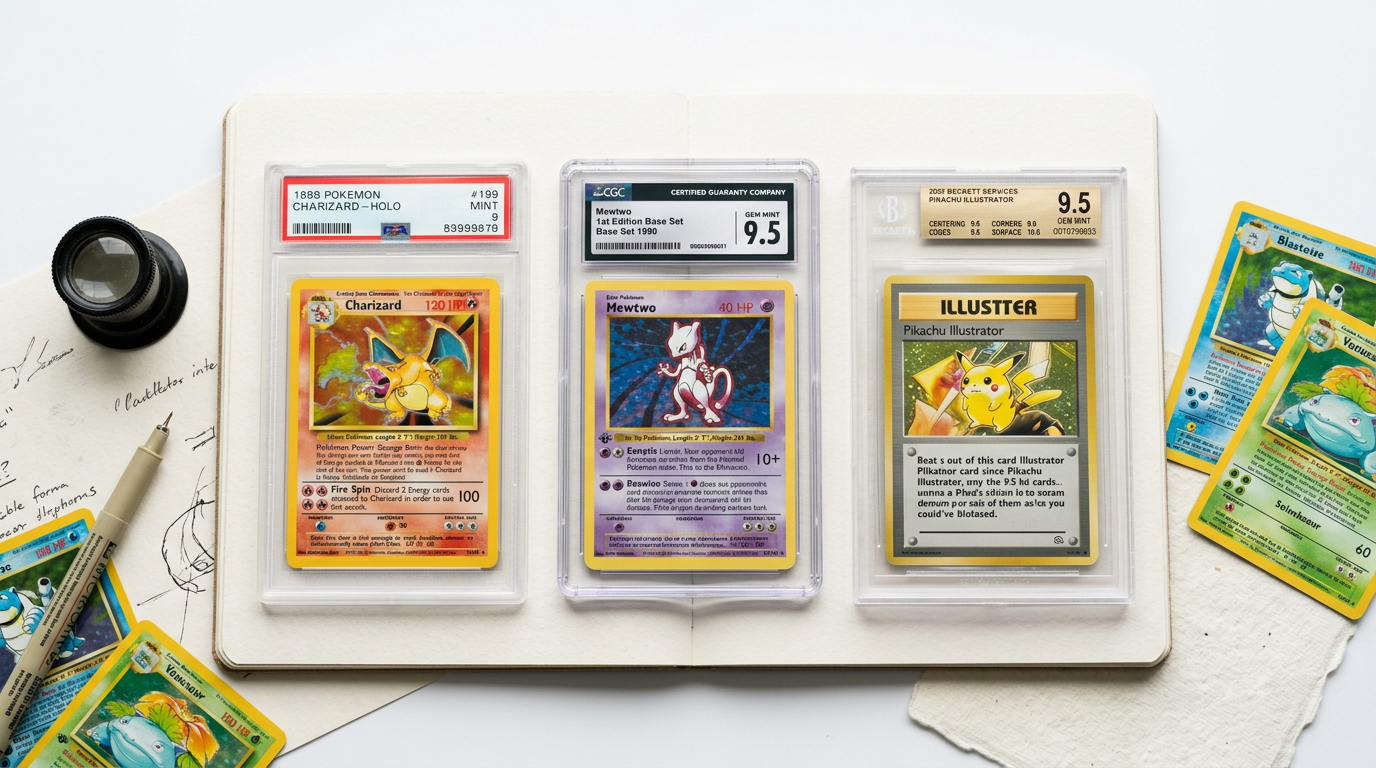
Counterfeits are the biggest risk in the hobby, and they cluster around the most valuable cards. The reliable tells: off-colour or soft artwork, misaligned holographic patterns, wrong card stock weight, and printing that looks “almost right” under a light. Graded slabs can also be faked — always verify the slab number against the lab’s population report. When buying from a specialist, ask for close-up photos of corners and surface on high-value items; a legitimate seller will oblige without hesitation. If the price looks dramatically cheaper than recent sales, slow down — deep discounts are the most common vector for fakes.
Pricing Like a Pro
Price by sold listings, not asking prices — asking prices routinely sit above what items actually sell for. Condition changes everything: a Near Mint copy of a card can trade well above a Played one, and the gap widens as a card becomes scarcer. For Australian buyers, always add the import math to overseas prices: international shipping, customs thresholds, currency margin and two to four weeks of waiting typically add 15–30% on top of the sticker price. That is why, for most buyers, a fair local price from a verified Australian vault is the total-cost winner in this trading cards buying guide australia.
Shipping From Perth
At XOTIK TCG, every order is packed in tamper-evident, protective packaging and dispatched within 24 hours from Perth, WA. Free tracked shipping applies over $99, tracking is live from day one, and orders above $500 carry full-value courier insurance automatically. Metro deliveries typically land in 1–3 business days; regional and remote Australia takes 3–7 days. Payment is by bank transfer or PayID — and if anything arrives damaged or not as described, send a photo and we replace or refund it immediately.
Grading & Condition
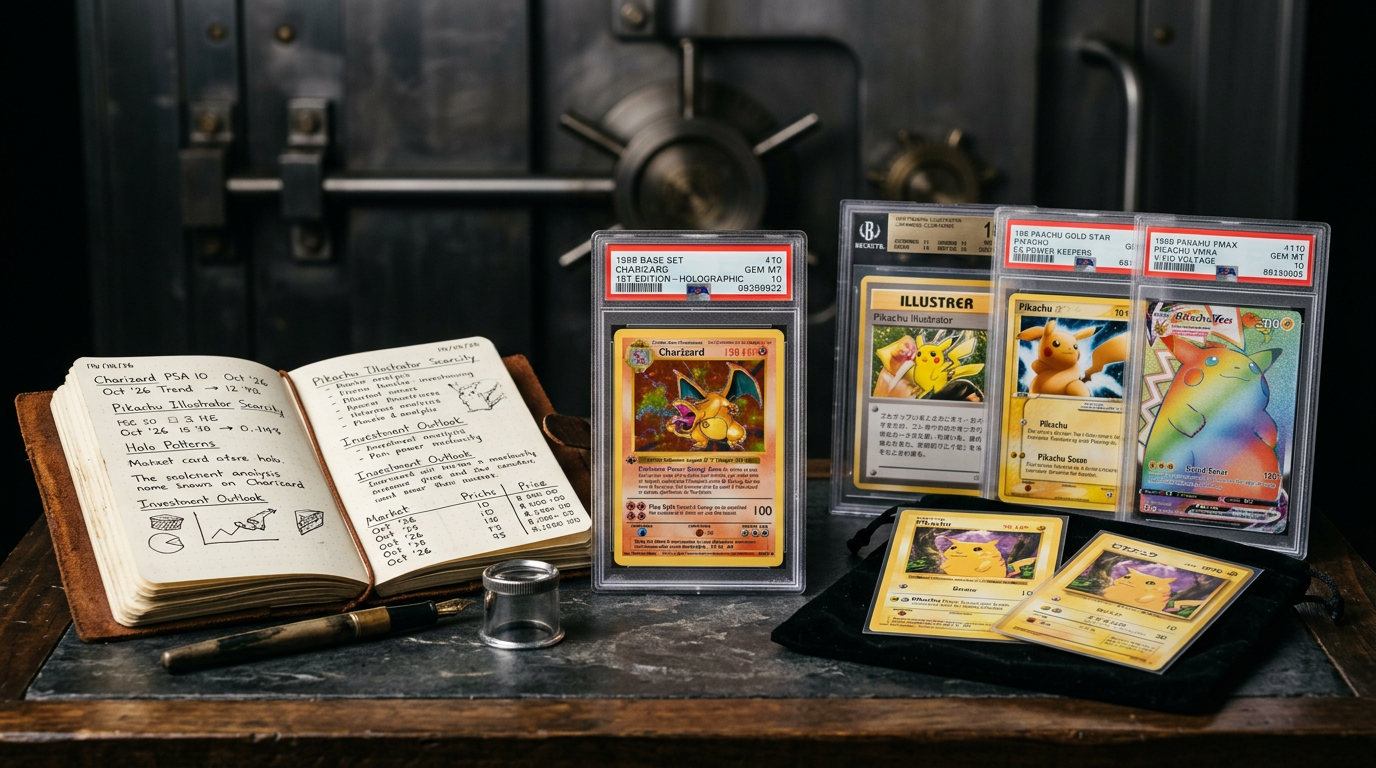
Learn the vocabulary once and you will shop like a pro: Mint is flawless, Near Mint shows little to no wear, Excellent shows light play wear, Good shows visible wear but is displayable, and Sealed means factory-sealed and never opened. PSA, BGS and CGC are the three major grading labs; a PSA 10 (Gem Mint) is the market’s gold standard. Buy condition honestly — a card graded exactly as it looks is worth more in the long run than an inflated grade that does not survive a second opinion. Our own condition labels are conservative on purpose, for exactly that reason.
Counterfeit Case Studies: What to Look For
Three patterns account for most of the counterfeit problems buyers encounter. First: the “too good to be true” rare — a chase card at half recent sales, usually printed on wrong-weight stock with soft, off-colour artwork. Second: the resealed box — factory-looking shrink hiding a swapped or missing card, detectable by corner texture, seal alignment and the feel of the pack stack. Third: the fake slab — a convincing shell with a counterfeit or swapped card inside, which is why the slab number must resolve on the lab’s own website, not a lookalike domain. Any one of these tells is reason enough to walk away; together, they are the entire counterfeit risk model in one sentence.
Seasonal Buying: When Prices Move
Prices across the hobby follow a rhythm worth knowing. Sealed product peaks in the weeks before a major set release and softens after the release lands. Singles from popular sets firm up quietly over six to twelve months as supply tightens. And the calendar matters: end-of-year spending lifts demand for gift-friendly sealed product, while new-set launch windows are when chase-card prices move fastest. If you are patient, buying between major releases is usually the calmest window on price; if a specific piece matters to you, in-stock beats timing every time — the best price on a card you never buy is irrelevant to the collection.
Building a Budget Without Buying Mistakes
The most common beginner mistake is buying the wrong thing cheap instead of the right thing fairly. A played copy of a card you will never play again is an expensive way to learn that point. Start with what you will actually use or display, buy the best condition your budget allows, and let the rest of the budget go to protection — sleeves and storage protect every future purchase, not just today’s. Then track what you bought and what it sold for over time; that personal price history is the best market data there is, and it is exactly what separates confident buyers from anxious ones in this guide to buying trading cards in Australia.
Budget planning also means timing: spread larger purchases across release cycles rather than chasing launch-day spikes, watch for the calm windows between major sets, and remember that a fair local price today usually beats a cheaper import quote after the full journey math. The guides on this page and in the Collector’s Journal exist to keep that discipline simple — one framework, applied to every card you consider before you buy.
A quick note on the buying experience: our checkout is fast, the cart keeps your selection secure for 30 minutes, and the confirmation email includes your tracking details the moment the parcel is dispatched. Questions at any stage — about condition photos, shipping estimates or payment options — go to info@xotiktcg.com and a real human in Perth answers within one business day.
For buyers outside Western Australia, our per-order shipping tiers keep the cost predictable: metro deliveries to Sydney, Melbourne and Brisbane typically land in 2–4 business days, while regional centres and remote posts take a little longer. Every shipment is tracked, and every dispatch comes with the same vault-grade packing regardless of order size.
One last thing most Australian buyers appreciate: there is no import paperwork, no brokerage fees and no currency conversion drift. The price you see at checkout is the price you pay, GST included — which is why buying trading cards buying guide australia locally is often the total-cost winner even before counting the counterfeit-risk savings.
How do we set the price on trading cards buying guide australia? We track Australian sold data for the item, factor in the condition grade on our shelf, and price it to be competitive for a buyer who values certainty. If you see a number you think is wrong for the market, message us — we would rather adjust a price than lose a buyer who knows their market.
A note for players: if you are buying trading cards buying guide australia to play, confirm the set legality for your format before checkout. Our support team answers format questions daily, and every listing shows the set and game so you can double-check against the current ban and restriction list before you order.
For first-time buyers: the whole process takes minutes. Add the item to your cart, choose your payment method, and you will receive an order confirmation immediately, followed by a tracking number as soon as the parcel is dispatched. No account needed to browse, and checkout is the same whether you are buying a $5 single or a $500 box.
One of the most common questions we get from interstate buyers is about insurance on high-value orders. Every XOTIK TCG parcel ships tracked, and orders above $500 are covered by full-value courier insurance automatically — no extra charge, no forms, just protection that is already in place when the parcel leaves Perth.
If you are comparing us with a marketplace, also compare what happens after the sale. On marketplaces, disputes can drag on for weeks with evidence rounds and fee clawbacks. Here, the process is a photo, an email, and a resolution — because the stock is ours, the warehouse is ours, and the accountability is ours too.
Collectors who buy sealed product often ask whether shrink can be opened and resealed for protection. We ship sealed product exactly as it left the factory, in protective outer packaging. If you want an extra layer for a high-value box, we can add rigid corner protection at no cost — just note it in your order.
Our Perth vault runs in rotation: fast movers are stored in the dispatch bay for same-day packing, while long-term stock sits in climate-controlled storage. That means a $3 card and a $3,000 slab both get the same inspection standard, the same packing protocol and the same 24-hour dispatch commitment.
Finally, provenance documentation: every order comes with a dated receipt and a full order history you can keep. If you ever trade, sell or submit a card for grading, that paper trail adds confidence for the other party — and it is one quiet reason institutional collectors buy from Australian retailers rather than private sellers.
Some buyers ask whether we offer trade-ins or consignment. At the moment our focus is buying — we buy select high-value graded cards and sealed collections outright, with payment by bank transfer the same week. If you have a graded set or sealed stock you are considering selling, send us photos and grades and we will tell you straight whether it is something we would buy and at what price.
A word on language and regional printing: everything listed here is the official English release unless a product explicitly states otherwise. Japanese and other regional printings trade differently, so if a listing does not say Japanese, you are getting the English release that Australian players and collectors use for local play and local grading.
If you are new to the hobby and not sure where to start, our FAQ and the guides in the Collector’s Journal walk through budget builds, starter products and the difference between singles, sealed and graded. Most first purchases end up being a mix: one sealed product for the thrill, a few singles to learn the game, and a sleeve or two to keep everything protected.
And for the players among you: condition honestly matters more in play than collectors expect. A Good or Lightly Played card is perfectly playable and often the value pick for a budget deck, while Near Mint is where we recommend spending a little extra if you plan to sell the card on later. We grade for resale, not for perfection, so our condition labels are conservative on purpose.
Seasonal buying tip: prices across the hobby are calmest between major set releases and busiest in the weeks before them. If you are patient, mid-cycle is usually the softest window to add pieces; if you are chasing a specific item, in-stock beats timing every time — the best price on a card you never buy is irrelevant.
For grading-minded buyers: if you plan to submit trading cards buying guide australia for PSA, BGS or CGC later, condition is everything at that stage. Buy Near Mint or better, keep it sleeved from the moment it arrives, and handle it with bare hands as little as possible. Our conservation-first packing is designed with that endgame in mind.
A note on payment for interstate and remote buyers: we accept bank transfer and PayID on every order. For orders over $500 we also support split confirmation with the dispatch team, so nothing ships before you are fully comfortable with the listing.
If you collect in volume, batching your purchases is genuinely cheaper than ordering repeatedly. Combine the pieces you want into a single cart, take the free-shipping threshold in one go, and you save both the shipping and the packing overhead. Our Perth dispatch team packs multi-item orders as one protected shipment with a single tracking number for simple delivery.
What about returns? If an item arrives damaged, or is not as described, we replace it or refund it — your choice — with no need to ship it back in most cases. If you simply changed your mind on a sealed, unopened item, we accept returns within 14 days in original condition. The policy is written to protect you, the buyer, and it is applied the same way on a $5 order as a $500 one.
Last practical tip for Australian buyers: check the list price against what you would pay importing before you dismiss the local price. Add the shipping, the customs threshold, the exchange-rate margin and the two-to-four-week wait, and the local total is frequently the lower one — and it arrives this week instead of next month, already inspected and guaranteed.
Top Buyer Questions
How do I verify a graded slab?
Enter the slab number on the grading lab’s official website and check that the card, set and population data match. If the slab number does not resolve, walk away — regardless of the price.
Is it worth importing cards from the US?
Sometimes, for specific low-value staples. But once you add shipping, customs, currency and counterfeit risk, a fair local price usually wins for most purchases — and it arrives in days, not weeks.
Where do I start as a beginner?
Start with a sealed product from a set you love, a few singles to learn the game, and protective sleeves. Build slowly, buy condition honestly, and keep every receipt — provenance matters more than beginners expect.
Browse All 70 FAQs
The full question set — shipping, tracking, refunds, grading, set-specific buying questions and more — lives in the FAQ list below and in the Collector’s Journal. For official set information, the official TCG sites remain the best reference. When you are ready, the shop has everything in stock and ready to ship from Australia.